Today, let’s explore the fascinating concept of Maslow’s Hierarchy of Needs. This theory, developed by psychologist Abraham Maslow, provides a framework for understanding human motivation and the factors that drive our behaviors. It suggests that individuals are motivated to fulfill certain needs in a specific order, starting with basic physiological needs and progressing towards higher-level needs.
Maslow’s Hierarchy of Needs Chart: A Visual Representation
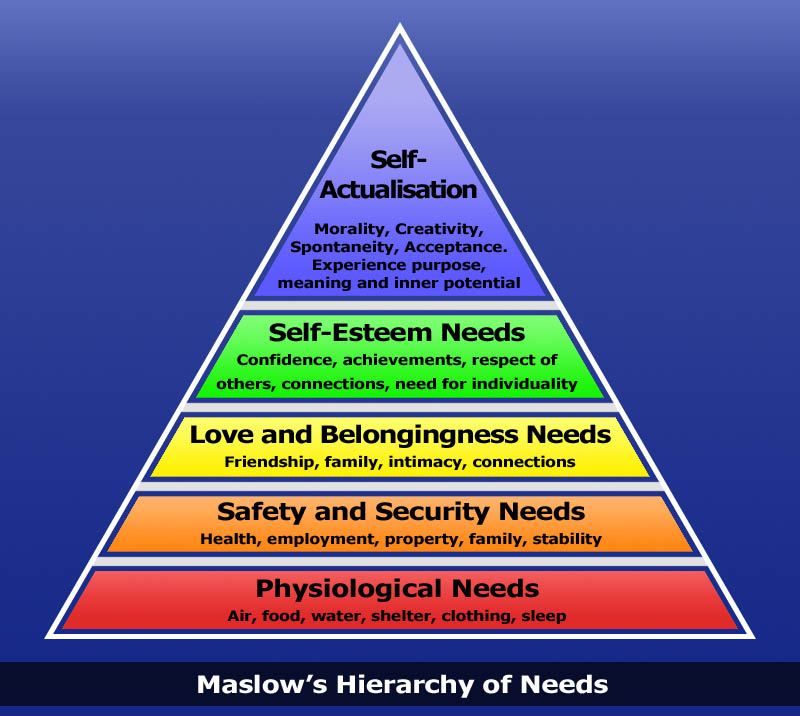 The image above presents Maslow’s Hierarchy of Needs in a visually appealing and easy-to-understand format. The pyramid represents the different levels of needs, with the most fundamental needs at the bottom and the highest needs at the top.
Understanding the Levels of Maslow’s Hierarchy of Needs
1. Physiological Needs: At the first level of the pyramid, we find the basic physiological needs required for survival. These include the need for food, water, sleep, and shelter. Without fulfilling these needs, it becomes challenging to move up the hierarchy to the higher-level needs.
2. Safety Needs: The second level focuses on safety needs, which include personal security, financial stability, and a safe and secure physical environment. When these needs are met, individuals are likely to experience a sense of comfort and stability.
3. Love and Belongingness: Moving up the pyramid, we reach the need for love and a sense of belonging. This includes the need for friendship, intimacy, and a supportive social network. Meeting these needs fosters a sense of connection and acceptance.
Applications of Maslow’s Hierarchy of Needs
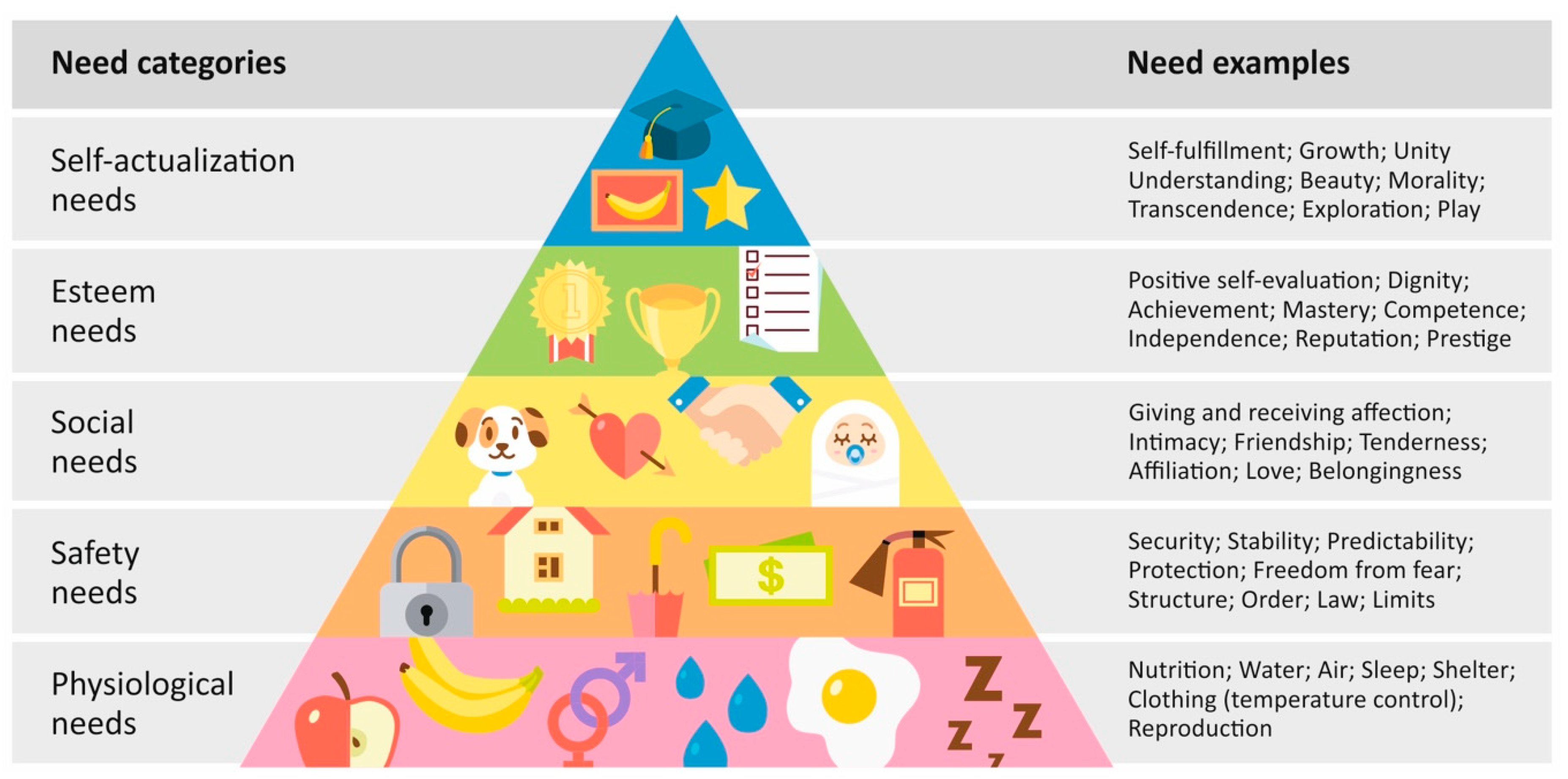 The image above illustrates the applications of Maslow’s Hierarchy of Needs in various contexts. This theory has found relevance in fields such as psychology, education, marketing, and even self-development.
In psychology, Maslow’s Hierarchy of Needs serves as a framework for understanding human motivation and behavior. It helps psychologists assess an individual’s needs and develop strategies to fulfill them for optimal well-being.
In education, this theory emphasizes the importance of fulfilling a student’s basic needs before expecting them to engage in higher-order thinking and learning. Educators can use this framework to create a positive and supportive learning environment.
In marketing, understanding consumer needs and motivations is essential for developing successful campaigns. Maslow’s Hierarchy of Needs provides insights into what drives consumer behavior and how marketers can create advertisements that resonate with their target audience.
